Refrigerator Not Cooling in Great Falls? Check This First
Refrigerator Not Cooling in Great Falls? What to Check Before You Call a Repair Technician
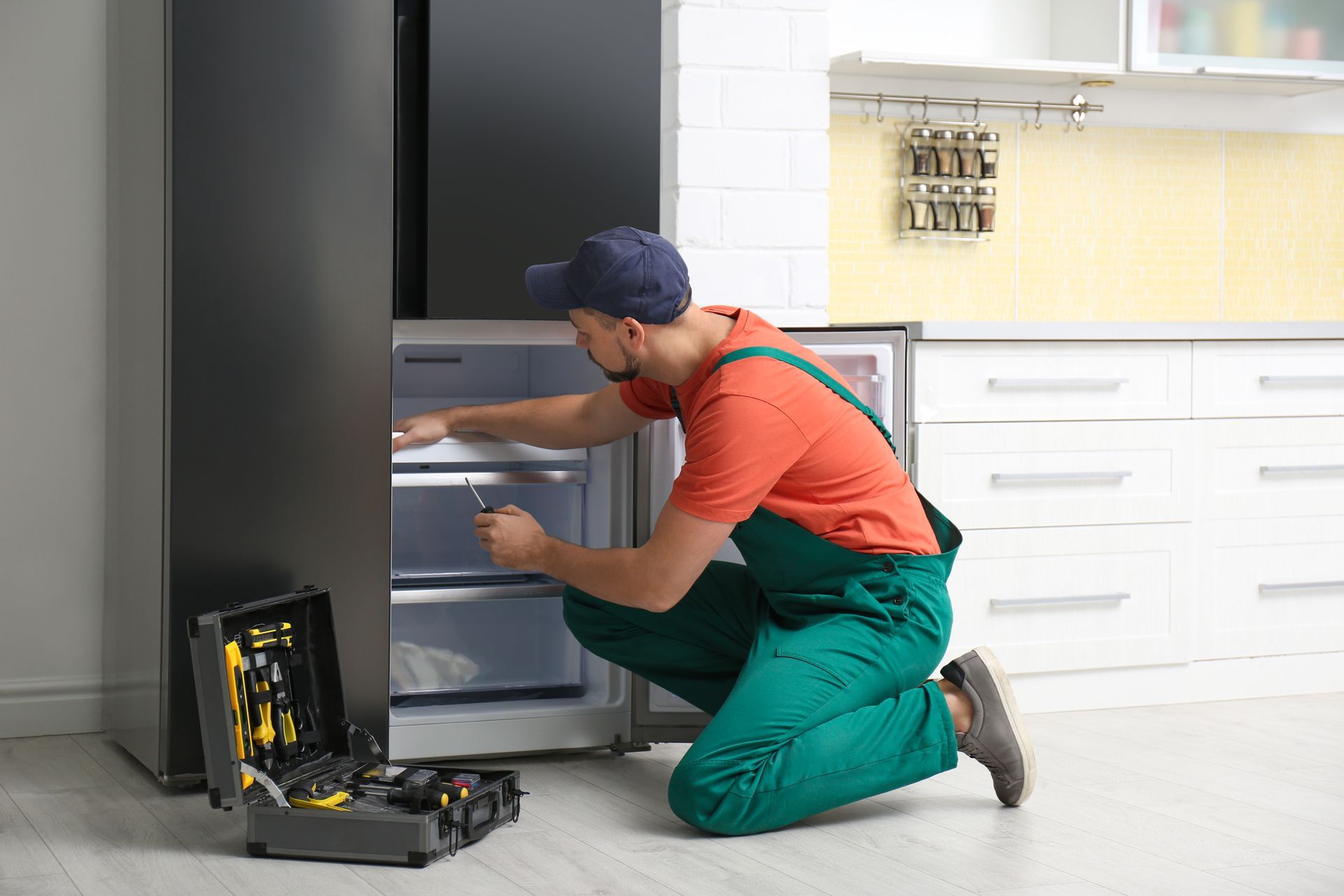
A warm refrigerator in Great Falls is a bigger deal this time of year because Thanksgiving-week grocery runs can fill a fridge to capacity — and an overpacked fridge that blocks its own interior vents will lose cooling fast. The good news is that some causes of a warm fridge are simple enough to check yourself before you pick up the phone. Others, though, need a technician the same day.
Five Things You Can Safely Check Before Calling
Many no-cool problems trace back to one of five basic causes a homeowner can inspect safely — no tools or technical know-how required.
1. Power and circuit breaker. Confirm the fridge is plugged in firmly and check your breaker panel. A tripped breaker is an easy fix that takes two minutes.
2. Condenser coils. These coils sit on the back or bottom of most units. When they get coated with dust or pet hair, heat can't escape, so the compressor overworks and the cabinet warms up. A quick vacuum or brush can restore airflow.
3. Door gasket. Slide a dollar bill into the door seal and close the door. If the bill pulls out easily, warm air is leaking in and forcing the compressor to run constantly without catching up.
4. Thermostat setting. A busy holiday kitchen makes it easy to bump the temperature dial. Double-check that your fridge is set between 35°F and 38°F and your freezer near 0°F.
5. Interior vents. The back wall of your fridge compartment has small vents that circulate cold air. Stacking food right against them cuts off airflow to the whole cabinet — a very common issue when the fridge is loaded up for a holiday.
If none of these explain the problem, the fault is likely inside the sealed system or the defrost circuit, and that calls for a professional. You can learn more about what a service visit covers on the refrigerator repair in Great Falls page.
Why Is My Fridge Warm but the Freezer Still Cold?
This specific symptom almost always points to a failed evaporator fan, a stuck damper, or a defrost system problem — none of which are DIY repairs.
Here is what happens: the evaporator coils sit in the freezer section and produce all the cold air for both compartments. A small fan pulls that air through a damper into the fridge side. If the fan stops spinning or the damper gets stuck closed, the freezer keeps its cold while the refrigerator section warms up steadily.
A defrost heater that stops cycling properly will let ice build up on the evaporator coils until airflow is completely blocked — same end result, different root cause. Either way, the fix requires accessing refrigerant-side components, so a technician visit is the right next step, not more troubleshooting at home.
How Fast Do You Need to Act? Food Safety in Great Falls
Acting quickly matters: the FDA guidance is that a refrigerator kept closed stays safe for about four hours after it stops cooling. A full freezer holds safe temperatures for 24 to 48 hours; a half-full freezer for about 24 hours.
Practical steps while you wait for a repair: move dairy, raw meat, and leftovers to a cooler with ice. In a Great Falls winter, an unheated garage or a cooler set outside is a real option — outdoor temps can serve as natural refrigeration when they stay below 40°F.
Discard anything that has been above 40°F for more than two hours. When in doubt, throw it out — foodborne illness isn't worth the risk.
Does the Age of Your Fridge Change the Math?
A repair is usually worth it on a unit under eight years old, but the calculation shifts as the appliance gets older. A common framework technicians use: if the repair cost exceeds roughly 50 percent of what a comparable new unit would cost, and the fridge is already ten or more years old, replacement often saves more money over time.
Other factors that tip toward replacement include outdated refrigerant types (which are harder and more expensive to source), repeated compressor issues, and rising energy bills from an inefficient older unit. A technician can give you a real number after an in-home diagnosis — there is no way to know the exact cost before that assessment.
If replacement turns out to be the smarter call, you can explore refrigerator replacement and installation options to understand what that process looks like.
How Does Ordering a Replacement Part Work?
The process is straightforward: a technician diagnoses the fault, identifies the exact part number needed, and sources it from a supplier. Once the part arrives, the technician returns to complete the installation.
In Great Falls, parts are not always available same-day — most come from regional distributors and ship within a few business days. Knowing this upfront helps you plan around the repair timeline rather than being caught off guard. For more common process questions, the repair vs. replace questions FAQ covers what to expect at each step.
Great Falls Winters and What That Means for Timing
Refrigerator problems in Montana's cold months carry an added layer: heating systems run hard, indoor air gets dry, and temperature swings between a warm kitchen and cold garage can stress door gaskets and condenser components over time. Scheduling a repair before a major holiday — rather than after food has already spoiled — avoids the highest-stakes version of the problem.
Local service also means a technician familiar with the region's housing stock and water quality, which affects ice makers and water lines differently than in milder climates. Same-day or next-day availability from a local provider beats waiting on a national dispatch queue by several days.
Catching a marginal door seal or dusty condenser coils during a routine check can prevent the kind of failure that leaves you scrambling over a holiday weekend.
A fridge-specific triage approach — checking simple causes first, then calling a technician for the symptoms that go beyond DIY — saves time, protects your food, and helps you make a clear repair-or-replace decision based on real information.
Schedule your service call with Affordable Appliance Repair and get a local Great Falls technician to your home for an accurate diagnosis.